We have compiled a list of manufacturers, distributors, product information, reference prices, and rankings for Defective measures.
ipros is IPROS GMS IPROS One of the largest technical database sites in Japan that collects information on.

Defective measures Product List and Ranking from 6 Manufacturers, Suppliers and Companies | IPROS GMS

Last Updated: Aggregation Period:Jun 03, 2026~Jun 30, 2026
This ranking is based on the number of page views on our site.

Defective measures Manufacturer, Suppliers and Company Rankings

Last Updated: Aggregation Period:Jun 03, 2026~Jun 30, 2026
This ranking is based on the number of page views on our site.

  1. 永和工芸 Osaka//Ferrous/Non-ferrous metals
  2. アイ・ティー・エス・ジャパン Chiba//Testing, Analysis and Measurement
  3. 三光合成 Toyama//Resin/Plastic
  4. Kaminashi inc. Tokyo//Information and Communications
  5. 5 ミナギ Osaka//Industrial Machinery

Defective measures Product ranking

Last Updated: Aggregation Period:Jun 03, 2026~Jun 30, 2026
This ranking is based on the number of page views on our site.

  1. "Gas Release Z Pin" for silver defect measures, available for short delivery with full processing! 三光合成
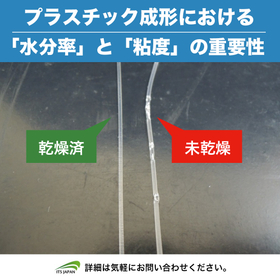
  2. Countermeasures for molding defects focusing on moisture content and viscosity for containers. アイ・ティー・エス・ジャパン
  3. Measures to Address Molding Defects through Moisture Content and Viscosity Measurement for Electronic Devices アイ・ティー・エス・ジャパン
  4. [Case Study] Causes and Countermeasures for Quality Defects from the Perspective of 5M + E Kaminashi inc.
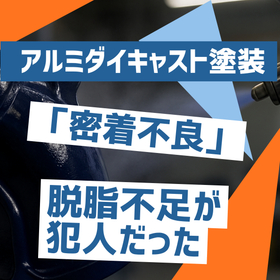
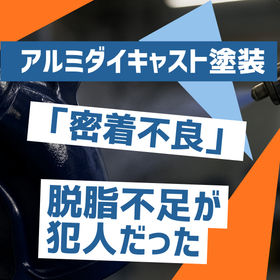
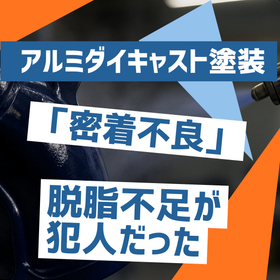
  5. 4 Countermeasures for Poor Adhesion of Aluminum Die-Cast Coating for Automotive Parts 永和工芸

Defective measures Product List

1~14 item / All 14 items

Displayed results

[Case Study] Causes and Countermeasures for Quality Defects from the Perspective of 5M + E

We also introduce the procedures to follow in case of an emergency! Please make use of this in your efforts to reduce quality defects.

In the manufacturing industry, addressing quality defects is essential. When quality defects occur, they not only lead to increased costs and delays in delivery but also result in a decline in the image of the company and brand. Therefore, many managers are likely to be thinking of ways to prevent quality defects before they happen or searching for specific methods that can be implemented within their own company. In this article, we will introduce the basic concepts of quality defects, the impact on companies, main causes, specific measures to prevent them, methods for dealing with quality defects, and successful case studies. We hope this will be helpful in your efforts to reduce quality defects. *For more detailed content of the article, please refer to the link below.*

  • Other core systems
  • Defective measures

Added to bookmarks

Bookmarks list

Bookmark has been removed

Bookmarks list

You can't add any more bookmarks

By registering as a member, you can increase the number of bookmarks you can save and organize them with labels.

Free membership registration

Measures to control the occurrence of weld lines in injection molding for appearance defects.

Automatically explores gate positions that do not result in appearance defects in collaboration with 3D TIMON.

Weld lines can become an issue of strength and design depending on their occurrence location. To control the occurrence location of weld lines, it is generally known that changing the gate position, resin temperature, mold temperature, and holding pressure can be effective. In this case, we optimized the gate position to prevent weld lines from occurring in specified locations by integrating the general-purpose parameter optimization software "AMDESS" with the plastic injection molding CAE software "3D TIMON" developed by Toray Engineering Co., Ltd. As a result, by changing the gate position, we were able to shift the weld lines away from the specified area. [Results] - By changing the gate position, we were able to shift the weld lines away from the specified area. - The approximation of the objective function improved with each addition of the approximation accuracy enhancement proposal. - The effectiveness of the approximation accuracy enhancement proposals was also confirmed. *For more details, please refer to the PDF document or feel free to contact us.

  • Other analyses
  • Contract Analysis
  • simulator
  • Defective measures

Added to bookmarks

Bookmarks list

Bookmark has been removed

Bookmarks list

You can't add any more bookmarks

By registering as a member, you can increase the number of bookmarks you can save and organize them with labels.

Free membership registration

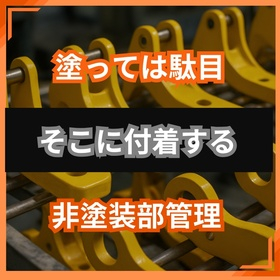
Countermeasures for Masking Defects

Adhesion to areas where it should not be applied can lead to assembly issues or poor electrical conductivity.

Masking defects are failures where paint adheres to areas that should not be painted. In automotive parts, issues are likely to occur at screw areas, contact points, fitting parts, grounding areas, and drainage holes, and they may be discovered during the assembly process at the customer's site. To prevent misalignment of the masking position, peeling, deterioration of the masking material, and differences in judgment among workers, it is necessary to standardize the range of non-painted areas, the application procedure, and the inspection methods.

  • others
  • Defective measures

Added to bookmarks

Bookmarks list

Bookmark has been removed

Bookmarks list

You can't add any more bookmarks

By registering as a member, you can increase the number of bookmarks you can save and organize them with labels.

Free membership registration

"Gas Release Z Pin" for silver defect measures, available for short delivery with full processing!

Attention those troubled by silver defects caused by gas in resin molding! Introducing the straight Z-pin that is less likely to clog.

"SG-WIND" is a gas venting component that achieves excellent discharge performance through its numerous perforated slit structures. The material consists of pin/SKD61 and gas venting part/SUS430, with pin diameters ranging from Φ5 to 16 and lengths up to L = over 900. To accommodate various situations, we also offer block types, ring types, and porous (porous body) options. 【Features】 ■ Pins are provided fully processed (production period: 2 weeks) ■ Usable as insert pins, EP, or Z pins ■ Additional processing possible for three-dimensional shapes ■ Excellent discharge performance achieved through numerous perforated slit structures ■ Straight structure that is difficult to clog ■ Usable as gas venting components or air blow components ■ Pins can also be sleeved *For more details, please refer to the PDF document or feel free to contact us.

  • Other molds
  • Defective measures

Added to bookmarks

Bookmarks list

Bookmark has been removed

Bookmarks list

You can't add any more bookmarks

By registering as a member, you can increase the number of bookmarks you can save and organize them with labels.

Free membership registration

Measures to Address Molding Defects through Moisture Content and Viscosity Measurement for Electronic Devices

Quantifying moisture content and viscosity in plastic molding to suppress insulation defects!

In the electronics industry, quality control in plastic molding is crucial to ensure the insulation properties of products. Particularly for electronic components used in high voltage or high-temperature environments, molding defects can lead to insulation failures, resulting in decreased product performance or accidents. If the moisture content of plastic pellets is high, it can cause foaming or shape defects during molding, potentially compromising insulation. The article we provide introduces a method to quantitatively evaluate the impact of the drying level of TPU pellets on moldability. By measuring the moisture content and viscosity of both undried and dried TPU pellets and comparing the appearance of the extrudates, it becomes possible to identify the causes of molding defects and implement countermeasures. 【Application Scenarios】 - Manufacturing of electronic components that prioritize insulation - Molding of high voltage equipment - Production of electronic devices used in high-temperature environments 【Benefits of Implementation】 - Reduction of molding defects - Improvement of product quality - Enhancement of yield

  • Extrusion Machine
  • plastic
  • Injection Molding Machine
  • Defective measures

Added to bookmarks

Bookmarks list

Bookmark has been removed

Bookmarks list

You can't add any more bookmarks

By registering as a member, you can increase the number of bookmarks you can save and organize them with labels.

Free membership registration

Measures to address the poor discharge of waste plastic fuel.

This is an introduction to the case study of the bridge breaker "Brodisk."

This is an introduction to the implementation case of the bridge breaker "Brodisk." Unlike other bridge breakers, it does not cause the powdery material to be degassed due to impact or vibration, which prevents clogging. It also does not damage the tank. If you are struggling with powdery materials, please consult us. 【Key Points of This Equipment】 ■ The elastic disk (silicone) is very important in terms of strength and durability, especially considering the risk of foreign material contamination. Our silicone disk is exceptionally strong and durable. Once you use it, you will understand! ■ Control (how to aerate?) is crucial! We provide guidance on what should be done. We also have a dedicated controller available. We have many implementation examples posted on our website. You can check them out through the link below.

  • 2.png
  • 3.jpg
  • 4.png
  • Other powder equipment
  • Defective measures

Added to bookmarks

Bookmarks list

Bookmark has been removed

Bookmarks list

You can't add any more bookmarks

By registering as a member, you can increase the number of bookmarks you can save and organize them with labels.

Free membership registration

0325 Measures to address poor discharge of crushed gypsum board.

Introducing a case study on the implementation of bridge breakers for discharge countermeasures.

We would like to introduce a case where our recycling plant (test plant) was used. This time, considering the possibility that the material properties may change in the test plant and that the hopper has a gentle slope, we recommended the BD-20 type, which has a larger air volume compared to the standard BD-15 type, and it was implemented. 【Overview of Usage Conditions】 ■ Target Material - Gypsum board crushed product (no paper content) - Average particle diameter of about 100μm (wide particle size distribution) - Bulk specific gravity of 0.6 ■ Hopper - Capacity of 4m3 - Diameter of 1800φ - Discharge diameter of 200φ - Cone section slope of 45° *For more details, please refer to the PDF materials or feel free to contact us. *Our website features numerous implementation examples. You can check them via the link below.

  • 2.png
  • 3.jpg
  • 4.png
  • Other powder equipment
  • Defective measures

Added to bookmarks

Bookmarks list

Bookmark has been removed

Bookmarks list

You can't add any more bookmarks

By registering as a member, you can increase the number of bookmarks you can save and organize them with labels.

Free membership registration

Measures to address poor adhesion of painted aluminum die-cast parts for marine vessels.

Identify the poor adhesion caused by insufficient degreasing. Explanation of the important process.

In the hull of marine parts, durability and reliability under harsh environments are required. In particular, the painting of aluminum die-cast parts poses a significant challenge, as poor adhesion of the paint film can directly affect product lifespan and safety. Paint peeling can be caused by various factors such as salt damage, water pressure, and physical impacts, but one of the root causes is inadequate degreasing processes. Residual release agents and processing oils on the material surface hinder direct adhesion between the paint and the material, and even trace amounts of oil that are not visible can compromise long-term durability. While there may be no issues immediately after painting, peeling can occur over time, often leading to additional costs such as re-coating or handling complaints. The first step in addressing poor adhesion is to standardize the degreasing process and review management conditions. 【Application Scenarios】 - Painting of hull parts for ships - Use in harsh marine environments - Ensuring long-term durability of the paint film 【Benefits of Implementation】 - Reduction of paint peeling risks - Improvement of product reliability - Reduction of re-coating costs

  • others
  • Defective measures

Added to bookmarks

Bookmarks list

Bookmark has been removed

Bookmarks list

You can't add any more bookmarks

By registering as a member, you can increase the number of bookmarks you can save and organize them with labels.

Free membership registration

Measures to address poor adhesion of painted aluminum die-cast for OA equipment enclosures.

Insufficient degreasing leads to poor adhesion. An explanation of the importance of the often-overlooked degreasing process.

In the painting of OA equipment enclosures, the adhesion of the paint film is emphasized to ensure the product's appearance quality and durability. Particularly in the case of aluminum die-cast materials, poor adhesion of the paint can easily occur due to the adhesion of release agents or processing oils, which can lead to peeling or deterioration of appearance. Even trace amounts of oil, which are difficult to detect visually, can cause issues such as peeling of the paint film, blisters during the curing process, and pinholes. When the degreasing process is shortened to improve productivity, it is not uncommon for the costs of re-coating or handling complaints to increase as a result. As the first step in addressing adhesion issues, standardizing the degreasing process and reviewing management conditions are essential. 【Usage Scenarios】 - Painting of aluminum die-cast OA equipment enclosures - Products requiring appearance quality and durability - Cases facing challenges in managing the degreasing process 【Benefits of Implementation】 - Reduced risk of peeling due to improved paint film adhesion - Suppression of painting defects such as blisters and pinholes - Reduction in costs for re-coating and handling complaints - Enhanced appearance quality and reliability of the product

  • others
  • Defective measures

Added to bookmarks

Bookmarks list

Bookmark has been removed

Bookmarks list

You can't add any more bookmarks

By registering as a member, you can increase the number of bookmarks you can save and organize them with labels.

Free membership registration

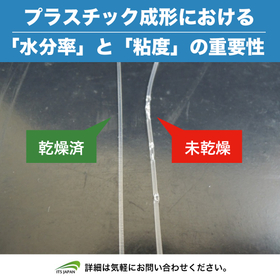
Countermeasures for molding defects focusing on moisture content and viscosity for containers.

Solve molding defects that affect the airtightness of containers with moisture content and viscosity measurements!

In the container industry, high sealing performance is required to maintain product quality. In particular, preventing leakage of contents and contamination by foreign substances is crucial for ensuring product safety and reliability. Molding defects are a significant factor that can compromise sealing performance. Therefore, to quantitatively evaluate the impact of the moisture content of TPU pellets on moldability, we measured the moisture content and viscosity of both un-dried and dried TPU pellets and compared the appearance of the extrudate (strand). The details are published on our company website. Please click the link below to view. 【Application Scenarios】 - Food containers - Pharmaceutical containers - Cosmetic containers - Chemical product containers 【Benefits of Implementation】 - Reduction of molding defects - Improvement of product quality - Enhancement of yield

  • Extrusion Machine
  • plastic
  • Injection Molding Machine
  • Defective measures

Added to bookmarks

Bookmarks list

Bookmark has been removed

Bookmarks list

You can't add any more bookmarks

By registering as a member, you can increase the number of bookmarks you can save and organize them with labels.

Free membership registration

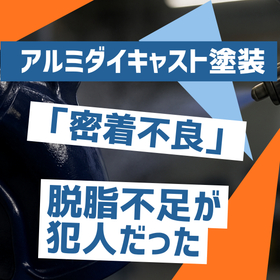
Countermeasures for Poor Adhesion of Aluminum Die-Cast Coating for Automotive Parts

Insufficient degreasing leads to poor adhesion. Explaining the importance of often-overlooked processes.

In the automotive parts industry, particularly in the painting of critical components like engine blocks, high adhesion and durability are required. Poor painting can directly lead to a decline in product performance and early deterioration, potentially compromising reliability. Specifically, release agents and machining oils that adhere to aluminum die-cast products are difficult to detect visually but can cause poor paint adhesion, blisters, and pinholes. These defects may not be apparent in the initial stages but can later lead to peeling and performance degradation. If the degreasing process is shortened to improve productivity, it is also necessary to consider the risk of increased costs for repainting or handling complaints. As the first step in addressing poor adhesion, standardizing the degreasing process and reviewing management conditions are essential. 【Application Scenarios】 - Painting of automotive parts like engine blocks that require high adhesion - Painting of aluminum die-cast products that are prone to adhering release agents and machining oils - Aiming to reduce repainting and complaint handling costs due to poor painting 【Benefits of Implementation】 - Improved product quality through reduced paint adhesion issues - Suppression of blister and pinhole occurrences - Reduction of repainting and complaint handling costs - Stabilization of the entire painting process and enhancement of reliability

  • others
  • Defective measures

Added to bookmarks

Bookmarks list

Bookmark has been removed

Bookmarks list

You can't add any more bookmarks

By registering as a member, you can increase the number of bookmarks you can save and organize them with labels.

Free membership registration

Measures to address poor adhesion of aluminum die-cast coatings for home appliances.

Insufficient degreasing leads to poor adhesion. Explaining the importance of often-overlooked processes.

In the painting of home appliance housings, the adhesion of the paint film is extremely important to ensure product quality and durability. Particularly in the case of aluminum die-cast materials, poor adhesion due to the presence of release agents or machining oils can easily lead to paint film peeling, which can not only result in poor product appearance but also potentially lead to functional degradation. Even trace amounts of oil that cannot be visually confirmed can affect adhesion after painting and may manifest as defects over time. Additionally, insufficient degreasing can lead to the occurrence of blisters and pinholes, potentially causing defects during the curing process. When the degreasing process is shortened to improve productivity, it is not uncommon for the costs of re-coating or handling complaints to increase as a result. As the first step in addressing poor adhesion, standardization of the degreasing process and a review of management conditions are required. 【Application Scenarios】 - Painting of aluminum die-cast home appliance housings - Products where appearance quality is emphasized - Products requiring long-term durability 【Benefits of Implementation】 - Reduction of peeling defects due to improved paint film adhesion - Suppression of blister and pinhole occurrence - Reduction of re-coating and complaint handling costs - Stabilization of product quality and improvement of reliability

  • others
  • Defective measures

Added to bookmarks

Bookmarks list

Bookmark has been removed

Bookmarks list

You can't add any more bookmarks

By registering as a member, you can increase the number of bookmarks you can save and organize them with labels.

Free membership registration

Countermeasures for Poor Adhesion of Coating on Aluminum Die Castings for Communication Equipment

Identify adhesion failures caused by insufficient degreasing. Explain the importance of the often-overlooked degreasing process.

In the telecommunications equipment industry, particularly for components like antenna bases, the adhesion of paint is crucial for maintaining product reliability. Residual release agents and processing oils on the material surface can hinder paint adhesion and lead to coating delamination. Even trace amounts of oil, which are difficult to detect visually, can result in reduced adhesion after painting and potential peeling weeks later. Additionally, insufficient degreasing can also lead to the occurrence of blisters and pinholes. When the degreasing process is shortened to improve productivity, it is not uncommon for the costs of re-coating or handling complaints to increase as a result. The first step in addressing poor adhesion issues is to standardize the degreasing process and review management conditions. Our technology addresses these challenges and provides stable painting quality. 【Application Scenarios】 - Painting of telecommunications equipment and antenna bases - Painting of components that are prone to adhesion of release agents and processing oils - Products requiring long-term coating reliability 【Benefits of Implementation】 - Reduction in complaints due to poor paint adhesion - Decrease in re-coating costs - Improvement in product reliability

  • others
  • Defective measures

Added to bookmarks

Bookmarks list

Bookmark has been removed

Bookmarks list

You can't add any more bookmarks

By registering as a member, you can increase the number of bookmarks you can save and organize them with labels.

Free membership registration